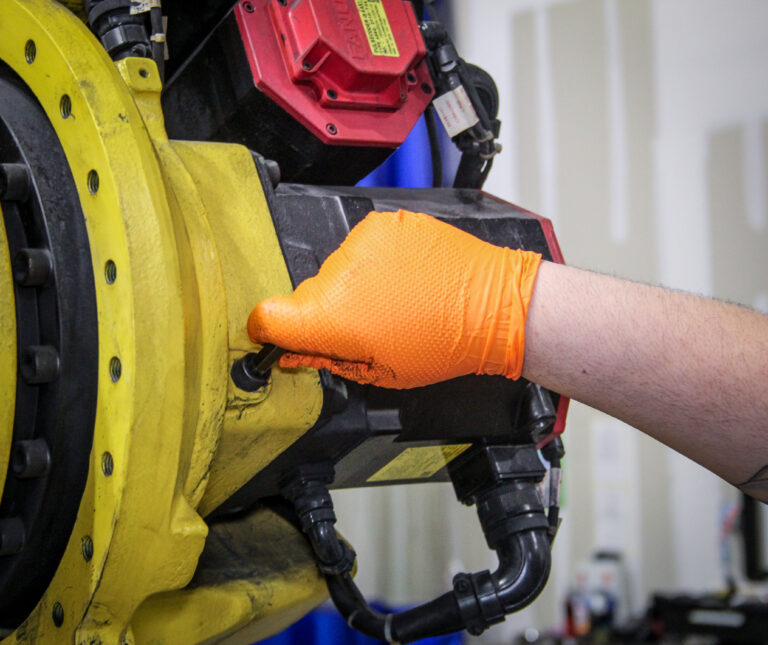
Keeping an industrial robot in top working condition isn’t difficult, but it does require consistency, and that begins with a dependable robot greasing schedule. Proper lubrication protects bearings, joints, and gearboxes from premature wear, allowing robots to perform reliably under demanding conditions. Unfortunately, maintenance routines often get delayed, leading to avoidable performance issues or system failures. What starts as a missed interval can turn into costly part replacements and unplanned downtime. In this article, we’ll explain why a structured greasing schedule is critical and what can happen when it’s overlooked. We’ll also review how to create a plan that supports long-term performance.
In This Article
- What Happens When You Ignore Greasing a Robot
- Bearings, Joints, and Downtime: A Familiar Chain Reaction
- Robot Maintenance Starts With Routine Greasing
- What Happens When a Greasing Schedule Falls Apart
- How To Build a Robot Greasing Schedule That Works
- Start Strong, Stick to the Schedule
- Frequently Asked Questions
What Happens When You Ignore Greasing a Robot
It doesn’t take much to disrupt a production line, especially when the issue stems from neglected maintenance. Over time, dry joints and overworked components begin to fail. In fact, many mechanical failures in industrial robots can be traced back to inconsistent or inadequate greasing. A well-managed robot greasing schedule helps protect your investment and keeps output stable. Without it, you’re more likely to encounter expensive repairs that could have been avoided.
Bearings, Joints, and Downtime: A Familiar Chain Reaction
When lubrication lapses, the effects are often gradual and destructive. Bearings can overheat quickly when they run dry, and that heat accelerates wear on critical components. As tolerances shift, systems begin to misalign, leading to reduced accuracy and eventual failure. At that point, repairs become unavoidable, requiring parts replacement and reprogramming. Costly delays are an inevitable result.
If you’re recovering from a failure and need to replace components, our Fanuc robot parts can help get your system operational again.
Robot Maintenance Starts With Routine Greasing
In many facilities, robot maintenance becomes a reactive task rather than a proactive process. But for high-cycle robots, especially in manufacturing and high-load environments, lubrication intervals need to be scheduled and followed closely. Missing one may not cause immediate damage, but repeated delays add up. It’s also essential to use the correct lubricant for your application. The consequences of using the wrong robot grease are well-documented, and choosing the wrong product can undermine even the most diligent schedule.
What Happens When a Greasing Schedule Falls Apart
When robots fail due to lubrication issues, the symptoms are rarely sudden. Instead, performance erodes over time, often in ways that could have been prevented. Without a reliable robot grease schedule, even well-maintained systems can develop problems that disrupt production and drive up repair costs. Below are a few scenarios that show how quickly things can unravel when robot lubrication gets overlooked or mismanaged.
A Missed Interval Turns Into a Major Repair
Imagine a six-axis robot in a packaging facility running thousands of cycles per shift. If its wrist joint goes too long without lubrication, friction increases, heat builds, and wear begins to accelerate. Over time, you might notice minor positioning errors or slower movements. Left unaddressed, the joint could degrade to the point of mechanical failure, forcing a shutdown and part replacement. Full recalibration would also be required.
Wrong Grease, Right Routine—Still a Problem
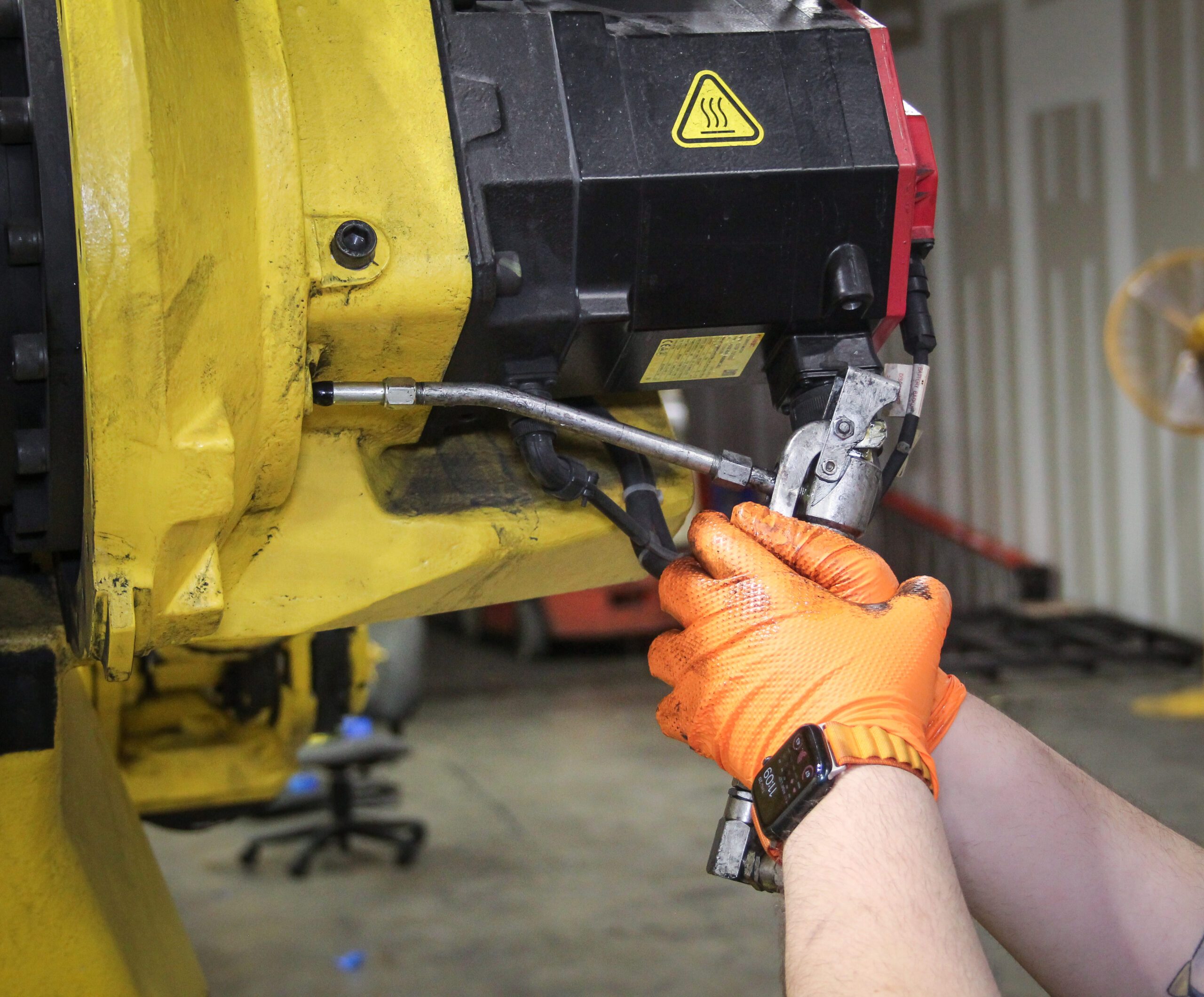
In another case, let’s say a team applies grease regularly but selects the wrong type for the robot’s load and temperature conditions. Even with a consistent robot greasing schedule, the product begins to break down under pressure. That can lead to grease migration, contamination, and eventual damage to internal components. Despite following the schedule, the equipment suffers because the robot grease wasn’t formulated for the application.
If you’re unsure what to use, this guide to choosing the right grease explains how to match products to specific robot models and environments.
Common Failure Points from Poor Lubrication
While the root causes may differ, the results tend to be the same. When lubricating a robot gets delayed or mishandled, key components are at risk:
- Joints and bearings can wear unevenly and lose range of motion
- Gear reducers may seize or develop internal backlash
- Seals can crack or leak under thermal stress
- Motors may overheat as mechanical resistance increases
Each of these failures reduces efficiency and shortens the robot’s service life. The good news is that they’re almost always preventable.
How To Build a Robot Greasing Schedule That Works
A strong robot greasing schedule is part of a larger strategy to keep your equipment operating consistently over the long haul. The goal is simple: reduce wear and avoid unplanned downtime. You also want to extend the life of your robots. Below, we outline how to structure an effective schedule and what to consider when setting intervals. We also cover how to adjust your approach based on the environment you’re working in.
Start with Manufacturer Recommendations
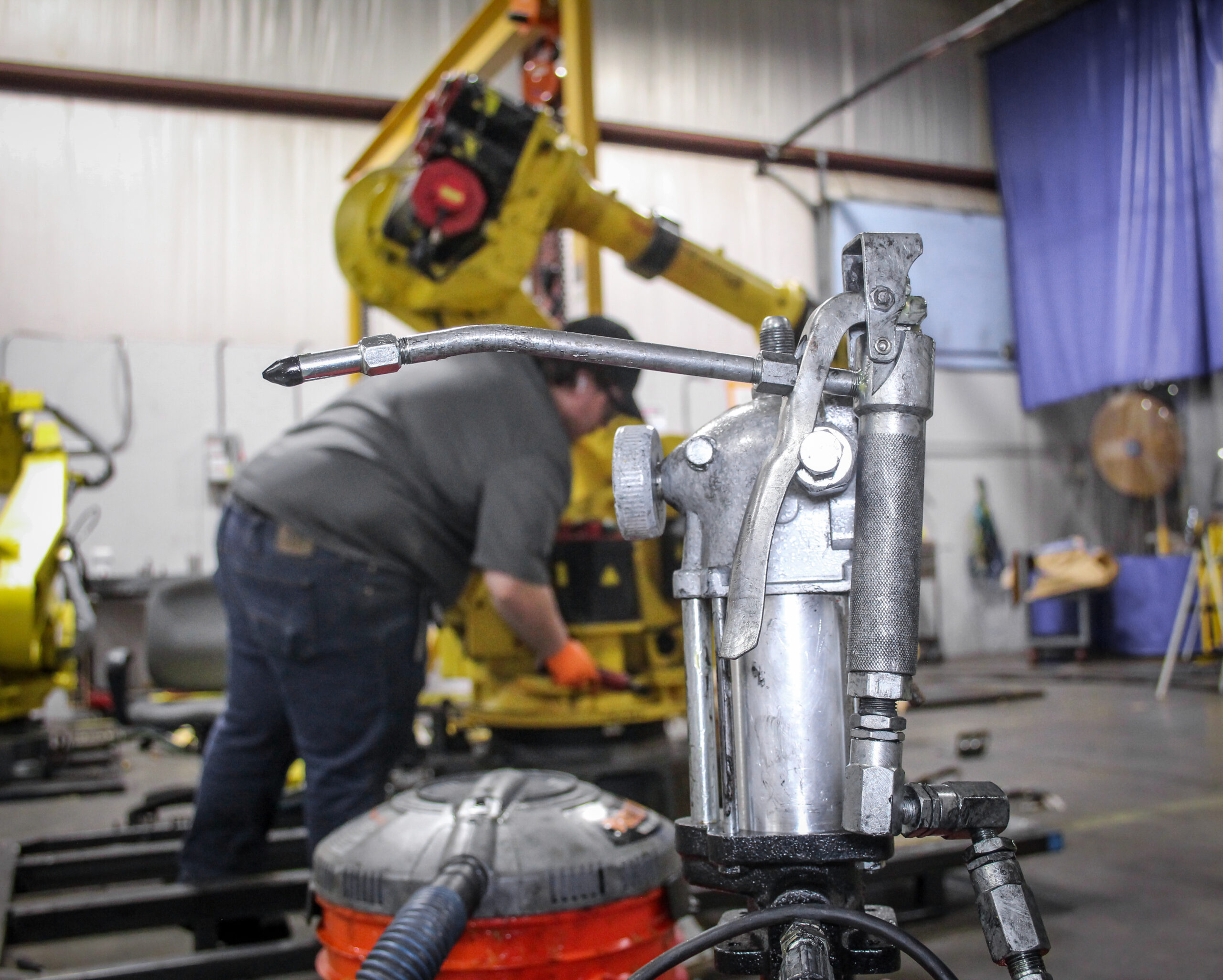
Every robot model comes with factory guidelines on lubrication points, grease types, and recommended service intervals. These aren’t suggestions; they’re baselines. Review your robot’s manual and maintenance documentation to identify:
Grease points by axis and component
- Required robot grease types for each point
- Time- or cycle-based interval recommendations
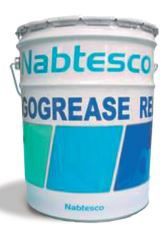
If you’re working with Fanuc robots, we offer a great lineup of grease products.
Adjust for Your Operating Conditions
Not every facility runs the same. Some environments demand more frequent greasing due to load or speed. Environmental conditions also play a role. Consider increasing lubrication frequency if your robots operate in:
- High-speed or high-load applications
- Dusty, hot, or moisture-prone areas
- Cleanrooms or food-grade environments (where special lubricants are required)
- 24/7 production cycles with limited planned downtime
For more information on how often to grease your robot, this maintenance guide offers detailed recommendations by robot type.
Track Maintenance the Right Way
Greasing schedules only work if they’re followed, and that means building accountability into the process. Whether you use a spreadsheet, digital CMMS, or whiteboard log, every completed greasing task should be tracked. Include:
- The date and time of service
- Technician initials
- Grease type used
- Notes on part condition, if relevant
Assign ownership to operators or maintenance leads who understand the robot and the demands of the line. This turns robot maintenance into a repeatable process, not a scramble when something goes wrong.
Signs It’s Time To Lubricate a Robot
Even with a solid schedule in place, real-world usage can wear components faster than expected. Watch for:
- Slower-than-normal arm movements
- Increased motor temperatures
- Noise during motion (especially at joints)
- Minor positioning errors or inconsistencies
These signs don’t always indicate failure, but they’re strong indications your robot lubrication routine may be overdue.
Start Strong, Stick to the Schedule
A well-executed robot greasing schedule is one of the most cost-effective ways to prevent breakdowns and extend the service life of your equipment. It doesn’t take much: just the right grease, the right interval, and a team that follows through. Skipping lubrication invites costly downtime. Staying consistent keeps your robots where they belong: in production.
Need parts, tools, or guidance? Explore our full range of Fanuc robot parts or stock up on grease and lubricants trusted by maintenance teams across the country. If you’re looking to upgrade or expand, we also carry refurbished and new Fanuc robots backed by expert support.
Ready to tighten up your maintenance schedule? We’re here to help you get started and stay ahead.
Frequently Asked Questions
The $6.9 billion global robot lubricants market can be confusing, but T.I.E. Industrial is here to help. Below are answers to common questions that help fill in the gaps and support your long-term robot maintenance strategy.
What happens if I skip or delay scheduled greasing?
Skipping or delaying grease intervals increases friction, accelerates wear, and puts extra load on motors and joints. Over time, that can lead to inaccurate movements and expensive component replacements, all of which are avoidable with consistent maintenance.
Does the type of grease affect the greasing schedule?
Yes, different greases have different lifespans, load capacities, and resistance to breakdown. Using a high-quality, application-specific robot grease may allow for longer intervals between servicing, while the wrong product can require more frequent reapplication or cause premature failures.
Should the greasing schedule vary by industry or application?
Definitely. Robots in high-cycle or harsh environments, like metal fabrication or foundries, will need lubrication more often than those in lighter-duty roles. Industry standards and cleanliness requirements influence how frequently you should lubricate a robot. Environmental factors are also a consideration.
Was this helpful?
0 / 0