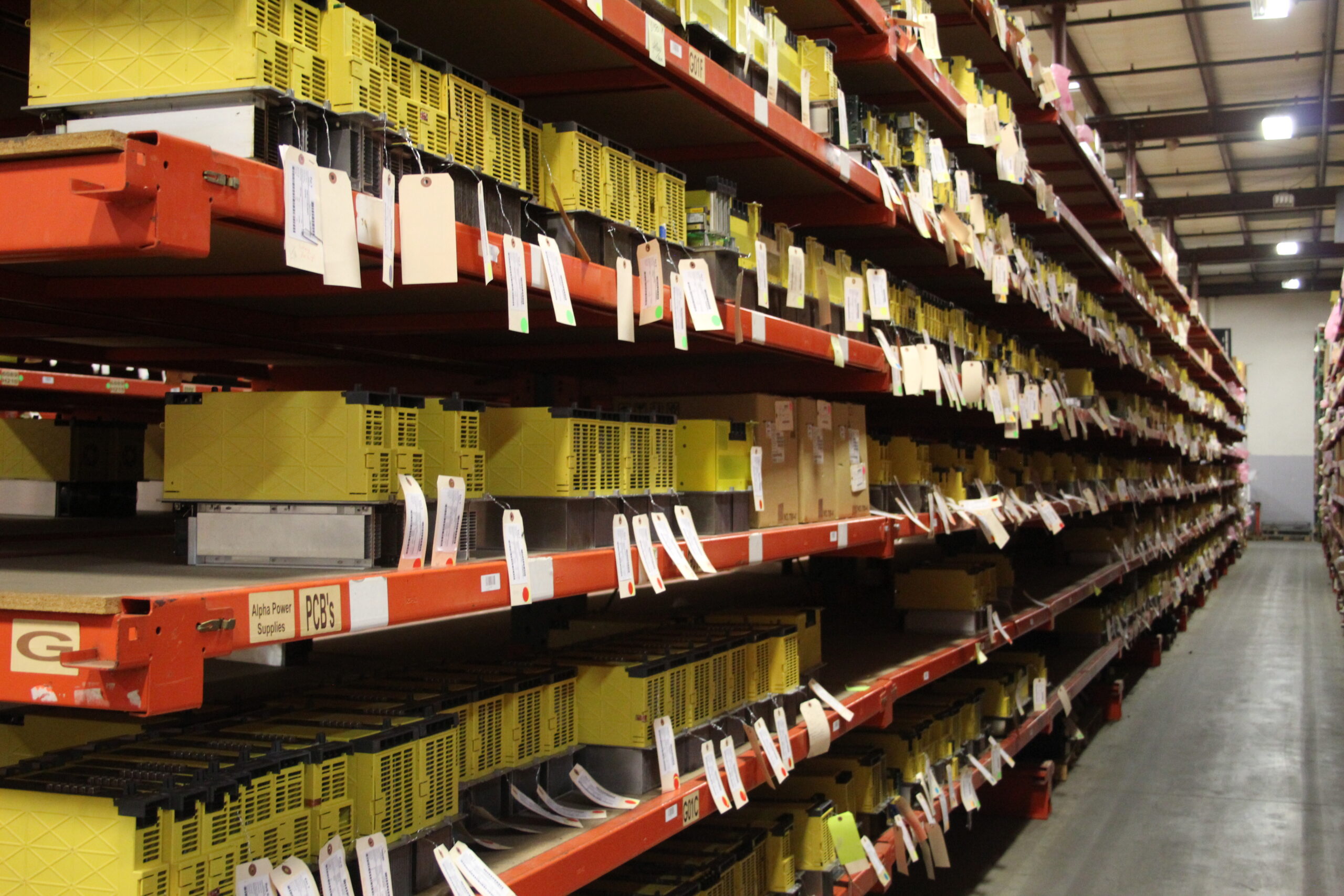
Building a CNC and Robotic Spare Parts Inventory That Protects Production
Walk into most maintenance departments and you’ll find a tool crib filled with everything from fasteners and hand tools to replacement components for critical production equipment. While every facility’s inventory looks a little different, one thing remains constant: the parts stored in the tool crib can often determine how long a production line remains down after a failure.
When a machine goes down unexpectedly, maintenance teams face a race against the clock. Every minute of downtime can impact production schedules, labor utilization, customer commitments, and profitability. Having the right spare parts available on-site allows maintenance personnel to respond immediately rather than waiting days—or even weeks—for replacement components to arrive.
The question every maintenance manager should ask is simple: If a critical machine failed today, would the parts needed to get it running again be sitting in your tool crib?
Why a CNC and Robotic Spare Parts Inventory Matters
Many organizations focus heavily on reducing inventory costs, but eliminating critical spare parts can create a much larger expense when equipment fails. The cost of carrying inventory is often insignificant compared to the cost of extended downtime.
Consider a CNC machine or industrial robot that supports a critical production process. If a failed servo drive, servo motor, teach pendant, or control component isn’t readily available, production may remain halted while maintenance searches for a replacement. Expedited shipping costs, overtime labor, missed production targets, and delayed customer orders can quickly exceed the cost of maintaining a spare part in inventory.
A well-managed CNC and robotic spare parts inventory allows maintenance teams to:
- Respond immediately to equipment failures
- Reduce production downtime
- Avoid emergency shipping expenses
- Support planned maintenance activities
- Improve equipment availability
- Maintain production schedules
The goal isn’t to stock every part for every machine. Instead, maintenance teams should focus on identifying and stocking components that create the greatest operational risk when they fail.
How to Identify Critical CNC and Robot Spare Parts
Not every component deserves shelf space in the tool crib. The most effective spare parts inventory programs prioritize components based on risk and replacement difficulty.
Questions to consider include:
- How long does it take to obtain a replacement?
- How frequently does the component fail?
- Will the machine stop running if the part fails?
- Is the component obsolete or difficult to source?
- Is the same part used across multiple machines?
- What is the cost of downtime if the part is unavailable?
Components that score high in several of these categories are often ideal candidates for spare inventory.
A criticality assessment can help maintenance teams determine which CNC and robot spare parts should always be available and which can be ordered as needed.
CNC Spare Parts Every Tool Crib Should Have
For facilities operating CNC equipment, several components consistently rank among the most critical spare parts.
Servo Drives
Servo drives control machine motion and positioning. A failed drive can immediately stop machine operation, making it one of the most important CNC spare parts to keep available.
Servo Motors
Servo motors are responsible for axis movement and spindle functions. While they often provide years of reliable service, failures can create significant downtime if replacements are not readily available.
For facilities operating older equipment, maintaining spare servo motors can be especially valuable due to longer procurement times.
CNC Controls
The CNC control serves as the brain of the machine. A control failure can leave an entire machine inoperable, making spare controls particularly valuable for critical equipment.
Operator Displays
Displays may seem less critical than drives or motors, but a failed display can prevent operators from interacting with the machine. Keeping a spare available can help avoid unnecessary production interruptions.
Printed Circuit Boards (PCBs)
Many CNC systems rely on specialized circuit boards that may have extended lead times or limited availability. Stocking critical boards can significantly reduce recovery time following a failure.
Robot Spare Parts Worth Keeping in Inventory
Facilities utilizing industrial robots should also evaluate the components most likely to impact production when failures occur.
Teach Pendants
Teach pendants are among the most frequently used components in robotic systems. They are regularly exposed to drops, impacts, environmental contaminants, and general wear. Keeping a spare teach pendant available can help maintenance teams quickly restore robot functionality.
Servo Motors
Robot servo motors drive axis movement and are critical to robot operation. A failed motor can halt an entire robotic cell until repairs or replacement are completed.
Servo Drives and Amplifiers
Robots rely on drives and amplifiers to control motion. These components are common candidates for spare inventory because their failure typically results in immediate downtime.
Robot Cables
Robot cables endure constant movement and flexing throughout their service life. Cable failures can create intermittent faults that are difficult to diagnose and often occur unexpectedly.
Maintaining a spare inventory of critical robot cables can significantly reduce troubleshooting and recovery time.
Managing Obsolete CNC and Robot Spare Parts
As equipment ages, spare parts inventory becomes even more important.
Many facilities continue to operate CNC machines and robots that have provided reliable service for years or even decades. While these assets may still be productive, sourcing replacement components can become increasingly difficult as parts become obsolete or manufacturers reduce support for older platforms.
For maintenance managers, this creates additional risk. A failed component that once could be sourced overnight may now require extensive searching or repair services to restore functionality.
Maintaining spare inventory for aging equipment can help facilities:
- Reduce exposure to supply chain disruptions
- Minimize downtime associated with hard-to-find parts
- Extend the useful life of existing equipment
- Avoid emergency replacement projects
- Improve long-term maintenance planning
For older CNC machines and robotic systems, a proactive spare parts strategy often provides significant operational and financial benefits.
Using CNC Part Repair Services to Maintain Your Fanuc Spare Parts Inventory
One of the most effective spare parts strategies is maintaining rotational inventory.
Rather than purchasing a replacement every time a component fails, maintenance teams can install a spare from inventory and send the failed unit out for repair. Once repaired, the component returns to the tool crib and becomes available for future use.
This approach offers several advantages:
- Lower maintenance costs
- Reduced capital expenditures on new components
- Faster response to future failures
- Extended lifecycle for existing equipment
- Consistent inventory availability
For example, if a servo drive fails, maintenance can install a spare immediately and return production to service. The failed drive can then be repaired and placed back into inventory, ensuring the spare position remains filled.
Over time, this repair-and-replenishment strategy helps organizations maintain a healthy CNC and robotic spare parts inventory without continually investing in new replacement components.
Building a CNC and Robotic Spare Parts Inventory Strategy
Developing an effective spare parts inventory program doesn’t happen overnight. The most successful maintenance organizations routinely evaluate their inventory and make adjustments based on equipment performance and operational needs.
A good starting point includes:
- Conducting equipment criticality assessments
- Reviewing downtime history
- Tracking component failures
- Identifying repairable assets
- Evaluating replacement lead times
- Establishing inventory minimums for critical components
- Reviewing obsolete equipment risks
Regular reviews help ensure inventory investments remain aligned with operational risks and production requirements.
Quick Audit: 5 Parts Every Maintenance Manager Should Review This Quarter
Not sure whether your tool crib is prepared for the next equipment failure? Start by evaluating these commonly stocked components:
1. Servo Drives
A failed servo drive can stop machine motion instantly. Review inventory levels and verify that spare units are available for your most critical CNC machines and robotic systems.
2. Servo Motors
Whether supporting a CNC axis or robot joint, servo motors are essential to machine operation. Confirm that replacement motors are available for equipment where downtime carries the greatest production risk.
3. CNC Controls
For many facilities, a control failure can create some of the longest downtime events. Evaluate lead times, availability, and support options for your installed control platforms.
4. Teach Pendants
Teach pendants are among the most handled components in robotic applications and are often exposed to impacts, environmental hazards, and everyday wear. Maintaining a spare can help minimize disruptions when failures occur.
5. Robot Cables
Continuous movement and flexing make robot cables vulnerable to wear over time. Inspect inventory levels and identify critical cable assemblies that would be difficult to source quickly.
Ask yourself: If any of these components failed tomorrow, how long would it take to get production running again?
Frequently Asked Questions About CNC and Robot Spare Parts Inventory
What spare parts should every maintenance department keep in stock?
Critical components often include servo drives, servo motors, CNC controls, operator displays, teach pendants, robot cables, and printed circuit boards. The specific inventory should be based on equipment criticality, lead times, and production impact.
How much CNC and robotic spare parts inventory should a facility maintain?
Inventory levels should be based on equipment criticality, historical failure rates, replacement lead times, and the cost of downtime. Critical components that can stop production should typically be prioritized.
Is it better to repair or replace industrial spare parts?
Many CNC and robot components can be repaired and returned to inventory. Repairing failed components often helps facilities maintain spare stock while reducing replacement costs and extending equipment life.
Why is spare parts inventory important?
A properly managed spare parts inventory helps reduce downtime, improve maintenance response times, avoid emergency procurement costs, and support production continuity.
Your Tool Crib Is an Insurance Policy Against Downtime
A well-managed tool crib is more than a storage area for spare parts—it’s an insurance policy against downtime. Every component sitting on the shelf represents a risk that has already been identified and planned for. When a critical failure occurs, the organizations that recover fastest are often the ones that invested in the right spares before they needed them.
By stocking essential CNC and robot components, maintenance teams can reduce downtime, improve responsiveness, and avoid the costs associated with emergency procurement. Pairing strategic spare inventory with a repair-and-replenishment strategy allows facilities to restore production quickly while controlling long-term maintenance expenses.
The next time you walk through your tool crib, don’t just look at what’s on the shelf. Consider what’s missing. The parts you choose to keep in inventory today could determine whether tomorrow’s breakdown becomes a minor maintenance event or a costly production outage.
Was this helpful?
0 / 0